Data Fabric for Insurance 2025
Unified Data Access for Enterprise Insurance Operations
Large insurance organizations face unprecedented data complexity, with critical business information scattered across policy administration systems, claims platforms, underwriting databases, and regulatory reporting tools. Traditional data integration approaches create bottlenecks, compliance risks, and missed opportunities for faster claims processing, accurate risk assessment, and competitive pricing.
Instant data fabric solutions transform how insurance teams access and analyze data — enabling real-time insights, automated compliance, and accelerated decision-making without the complexity, cost, and time investment of traditional enterprise platforms.

Key Challenges in Insurance Data Management
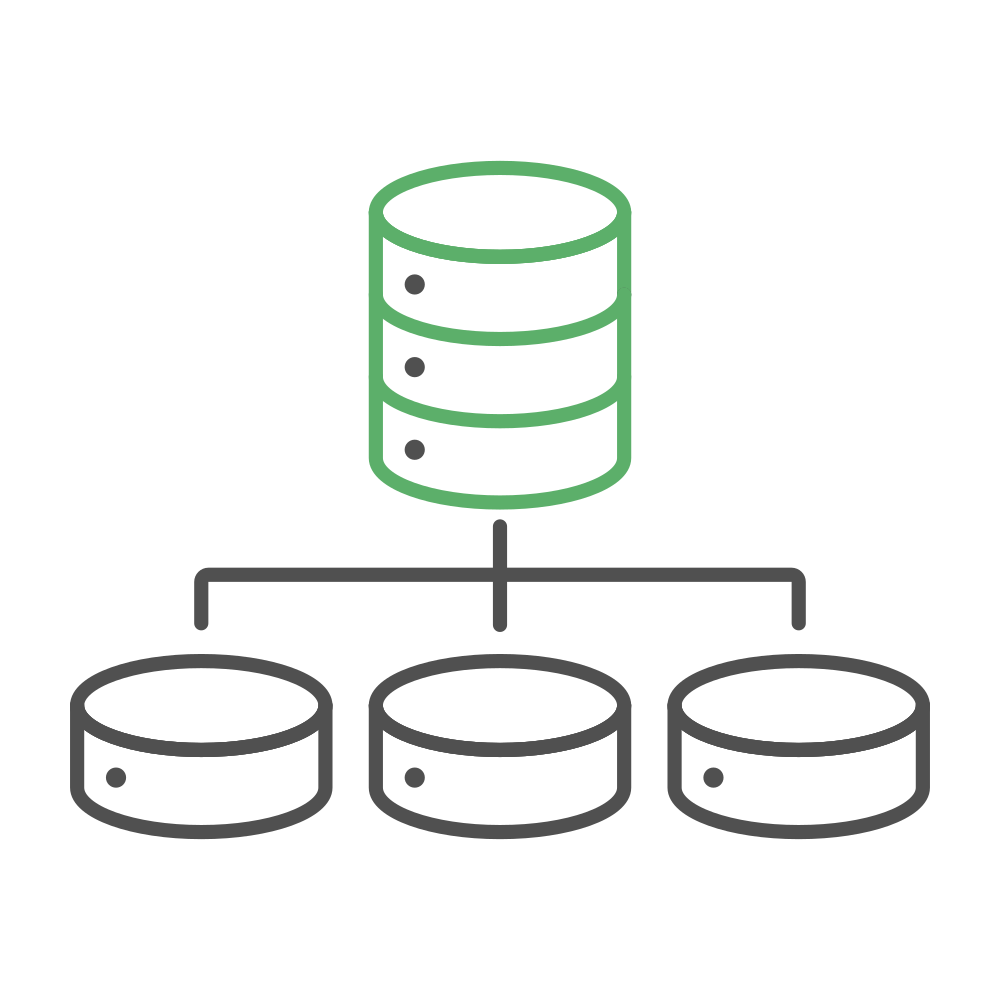
Challenge 1: Fragmented Claims and Policy Data
Enterprise insurers struggle with data silos across policy administration, claims management, billing, and customer service systems. Critical information needed for claims processing, fraud detection, and customer service exists in separate databases, creating delays and incomplete risk assessments.

Challenge 2: Complex Regulatory Compliance
Insurance regulations require comprehensive reporting across state, federal, and international jurisdictions. Managing compliance across dozens of data sources while maintaining audit trails creates significant administrative overhead and regulatory risk.
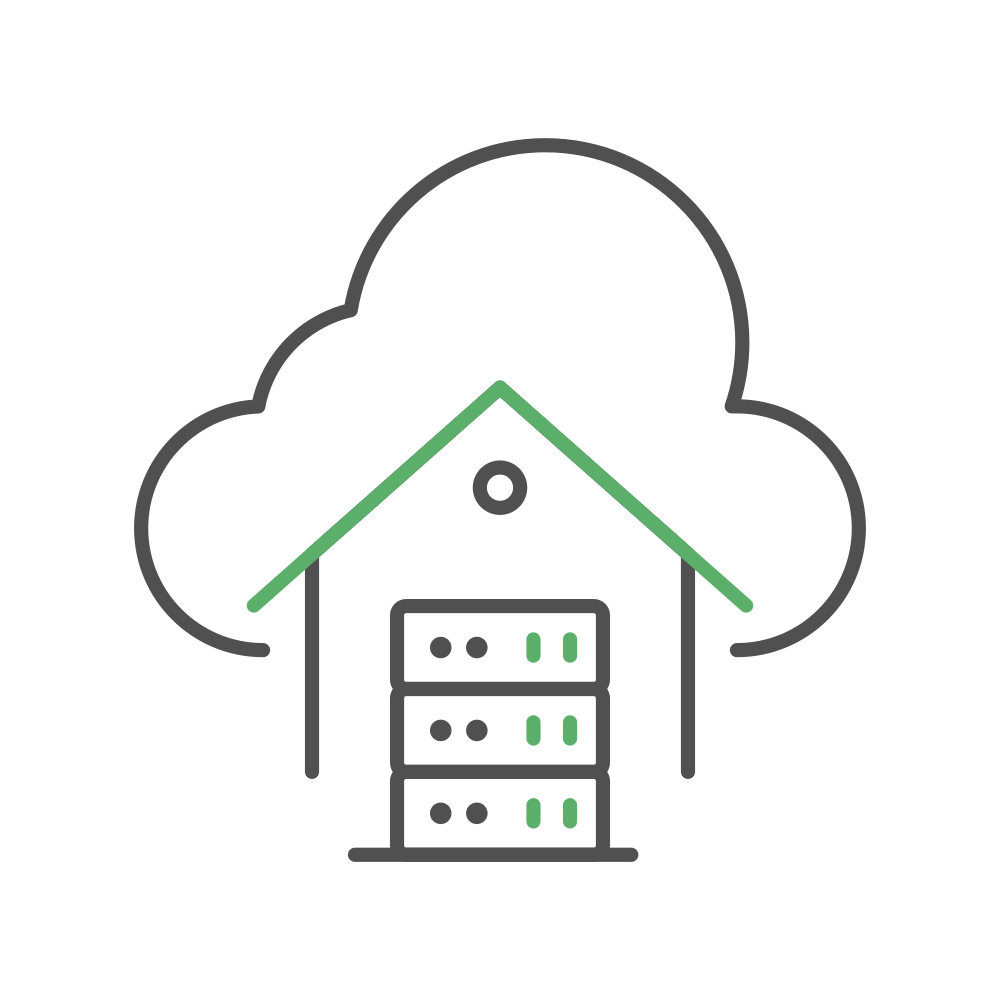
Challenge 3: Hybrid Cloud and On-Premises Data Complexity
Large insurance organizations maintain significant data infrastructure on-premises due to regulatory requirements and legacy system investments, while simultaneously adopting cloud-based analytics and modern applications. This hybrid architecture creates integration challenges between on-premises policy systems and cloud-based analytics platforms, requiring solutions that can seamlessly stitch together data across both environments.
Challenge 4: Structured and Unstructured Data Integration
Insurance data exists in multiple formats — from structured databases to unstructured policy documents, claim photos, and correspondence. Accessing and analyzing this mixed data for comprehensive insights requires complex integration that traditional platforms struggle to handle effectively.

Challenge 5: Real-Time Fraud Detection and Risk Assessment
Modern insurance operations require immediate access to cross-system data for fraud detection, risk scoring, and underwriting decisions. Traditional data integration creates delays that impact claim processing times and increase fraud exposure.
Challenge 6: Analyst Productivity and Self-Service Access
Insurance data analysts spend 60-80% of their time finding and preparing data rather than generating insights. Business teams depend on IT for data access, creating bottlenecks that slow critical business decisions and competitive responses.
How Data Fabric Transforms Insurance Operations

Instant Access to Distributed Insurance Data
Query data across policy administration, claims, billing, and external data sources in real-time without migration or complex ETL processes. Get immediate answers to business questions like “What’s the average claim cost for storm damage in Florida this quarter?” directly from your existing systems.
Insurance-Ready Governance & Compliance
Built-in governance ensures regulatory compliance across all data sources simultaneously. Automated audit trails and access controls reduce compliance preparation time by up to 75% while maintaining adherence to state insurance regulations and reporting requirements.

Conversational Data Access
Enable insurance professionals to ask natural language questions like “Show me high-risk policies in hurricane zones with claims history” and get immediate, governed insights without technical training or SQL knowledge.
Zero-Copy Data Architecture
Access data where it lives across cloud, on-premises, and hybrid environments without costly data movement or storage duplication. Seamlessly stitch together on-premises policy systems with cloud-based analytics platforms while maintaining data sovereignty and regulatory compliance.

Insurance Data Fabric Use Cases

Use Case 1: Accelerated Claims Processing
Challenge: Claims adjusters need comprehensive policy, customer, and historical data but must access multiple systems manually, creating processing delays and inconsistent decisions.
Solution: Instant access to unified claims data across all systems with conversational queries like “Show me all claims for this policy holder including repair history and coverage details.”
Results: 50% faster claims processing, 30% reduction in claim disputes, improved customer satisfaction scores.

Use Case 2: Real-Time Fraud Detection
Challenge: Fraud detection requires cross-system analysis of claims patterns, policy data, and external sources, but traditional integration creates delays that allow fraudulent claims to process.
Solution: Real-time federated queries across claims, policy, and external fraud databases with automated pattern detection and alert generation.
Results: 40% improvement in fraud detection accuracy, $10M+ annual savings from prevented fraudulent claims.

Use Case 3: Dynamic Risk Assessment and Pricing
Challenge: Underwriters need comprehensive risk data from multiple sources but lack real-time access to external data feeds, historical claims, and policy performance metrics.
Solution: Unified access to internal and external risk data with natural language queries for complex risk scenarios and competitive pricing analysis.
Results: 25% improvement in risk assessment accuracy, 15% increase in profitable policy writing.

Use Case 4: Regulatory Reporting Automation
Challenge: Compliance teams spend weeks manually aggregating data from dozens of systems for state and federal reporting requirements.
Solution: Automated regulatory reporting with pre-built templates for common insurance filings and real-time compliance monitoring across all data sources.
Results: 75% reduction in regulatory reporting preparation time, 95% reduction in compliance audit findings.

Use Case 5: Customer 360 and Retention Analytics
Challenge: Customer service and retention teams lack unified view of customer interactions, claims history, policy changes, and satisfaction metrics across channels.
Solution: Comprehensive customer profiles combining policy, claims, billing, and interaction data with predictive analytics for churn risk and retention opportunities.
Results: 20% improvement in customer retention, 35% increase in cross-sell success rates, enhanced customer experience scores.
Insurance Data Fabric Vendor Landscape
Traditional Enterprise Platforms
IBM Cloud Pak for Data, Microsoft Fabric, Informatica
- Comprehensive capabilities but require 6-18 months implementation
- Complex deployment requiring specialized consulting teams
- High infrastructure and ongoing operational costs
Consulting-Dependent Solutions
Palantir Foundry
- Extensive capabilities with embedded consulting approach
- Forward-deployed engineers create ongoing vendor dependency
- $5-20M+ multi-year engagements common in enterprise insurance
- Limited self-service capabilities for insurance analysts
Instant Data Fabric Platforms
Promethium
- Conversational data access through natural language queries
- Zero-copy architecture with deployment in days, not months
- Built-in insurance governance and compliance capabilities
- 360° context engine for trusted insights without consultant dependencies
- Empowers existing insurance teams rather than creating vendor lock-in
For a complete vendor analysis including detailed Palantir comparison, see our Data Fabric Vendor Comparison 2025.
Implementation Approach for Insurance
Insurance Data Fabric Implementation Comparison
| Implementation Factor | Traditional Platforms | Palantir Foundry | Instant Data Fabric (Promethium) |
| Deployment Time | 6-18 months | 12-24 months | Days to weeks |
| Implementation Cost | $2-5M+ infrastructure | $5-20M+ engagements | Transparent subscription |
| Team Requirements | Specialized consultants | Forward-deployed engineers | Existing insurance teams |
| Ongoing Dependencies | High IT maintenance | Consultant dependency | Self-service platform |
| User Training | Extensive technical training | Palantir-specific bootcamps | Natural language interface |
| System Integration | Custom development | Embedded consulting | Pre-built insurance connectors |
| Customization | IT-dependent changes | Consultant-managed | Business user configuration |
| Total Cost of Ownership | High + hidden costs | Very high + ongoing FDE costs | Predictable subscription model |
Timeline Comparison:
Traditional/Palantir Approach:
- Months 1-6: Infrastructure setup, consultant onboarding, system integration
- Months 7-12: Data modeling, custom development, governance implementation
- Months 13-18: User training, workflow integration, change management
- Month 18+: Production use and value realization
Instant Data Fabric Timeline:
- Week 1: Platform setup and connection to key insurance systems
- Week 2: User onboarding for claims, underwriting, and analyst teams
- Week 3+: Full production use with immediate productivity gains
Insurance Success Metrics
Enterprise insurance organizations implementing data fabrics typically see:
60%
improvement in data analyst productivity and insight generation
50%
reduction in claims processing time
75%
faster regulatory reporting preparation
40%
increase in fraud detection accuracy
25%
improvement in underwriting efficiency and profitability
Compliance & Security for Insurance
State and Federal Insurance Regulations
- Built-in compliance frameworks for NAIC reporting requirements
- Automated audit trails for state insurance department examinations
- Real-time policy enforcement across all insurance data sources
Data Governance for Insurance
- Role-based access controls aligned with insurance organizational structure
- Data lineage tracking for actuarial and regulatory reporting
- Centralized policy management across distributed insurance systems
- Protection of sensitive customer and policy information
Getting Started with Insurance Data Fabric
Evaluate Your Current State
- Audit existing insurance systems and integration complexity
- Assess regulatory reporting burden and compliance gaps
- Identify high-value use cases like claims processing or fraud detection
Pilot Implementation
- Start with claims data integration across 2-3 core systems
- Enable self-service access for claims adjusters and underwriters
- Measure time-to-insight improvements and analyst productivity gains
Scale Across Insurance Operations
- Expand to underwriting, billing, and customer service systems
- Enable enterprise-wide self-service data access
- Integrate with external data sources for enhanced risk assessment
Frequently Asked Questions
How does data fabric improve claims processing efficiency?
Data fabric enables claims adjusters to access comprehensive policy, customer, and historical data from a single interface using natural language queries. Instead of manually checking multiple systems, adjusters can ask questions like “Show me all previous claims for this customer including repair history and coverage details” and get immediate, governed results.
What about insurance regulatory compliance and audit requirements?
Modern data fabric platforms provide comprehensive governance capabilities including automated audit trails, data lineage tracking, and centralized access controls across all data sources. This unified approach to data governance significantly reduces the time and effort required for regulatory reporting and compliance preparation, while ensuring consistent data handling across your organization.
Can data fabric integrate with our existing policy administration and claims systems?
Yes, data fabric platforms are designed to connect with proprietary insurance systems through standard APIs and connectors, enabling immediate value without replacing existing policy administration, claims management, or billing investments.
How does data fabric compare to Palantir Foundry for insurance?
While Palantir provides comprehensive capabilities through embedded consulting, data fabric platforms like Promethium empower your existing insurance teams to achieve similar outcomes at 10-20x lower cost. Instead of creating consultant dependencies, you build internal capabilities while maintaining full control over your data and processes.
How quickly can we see results in our insurance operations?
Instant data fabric platforms can be deployed and delivering value within days to weeks, compared to 6-18 months for traditional enterprise platforms like Palantir. Insurance teams can start seeing productivity improvements in claims processing and underwriting immediately after deployment.
Learn More Related Content & Resources
- Read the full data fabric explainer
- Compare data fabric vs data mesh
- Compare data fabric vs data virtualization
- Explore the full insights hubs