360° Context Hub
The First Insights Context Graph
The 360° Context Hub ingests and curates multi-dimensional context from across your enterprise — catalogs, BI tools, semantic models, business rules, and tribal knowledge. At its core is the Insights Context Graph: the proprietary technology that maps user intent to the right context and data, delivering personalized, accurate results for every user and domain.

WHY IT MATTERS
Context is Everywhere. But It’s Not Connected and Not Usable.
Every AI model can generate SQL. But without understanding what “revenue” means in your org, which joins are valid, or how a metric is calculated by department — the output is unreliable. The 360° Context Hub solves this by building a live, multi-dimensional graph of your enterprise context. The more it ingests, the more accurate every answer becomes.
Production-Grade Accuracy
Context is the difference between a demo that works and a deployment that holds. The Insights Context Graph maps every question to the right data, definitions, and rules — eliminating the guesswork that breaks AI in production.
Weeks to Production, Not Months
The Context Hub leverages your existing investments — catalogs, BI tools, semantic models — so you don’t start from scratch. First domain live in 4 weeks, with each additional domain faster than the last.
Context That Compounds
Every query, correction, and endorsement strengthens the graph. Context compounds with each domain — the fourth deployment is faster and more accurate than the first.
Personalized for Every User and Domain
A CFO and a supply chain analyst asking the same question get different answers — because context includes role, domain, and organizational rules, not just table definitions.

KEY CAPABILITIES
Multi-Dimensional Context Engineering. From Metadata to Meaning.
Context Graph
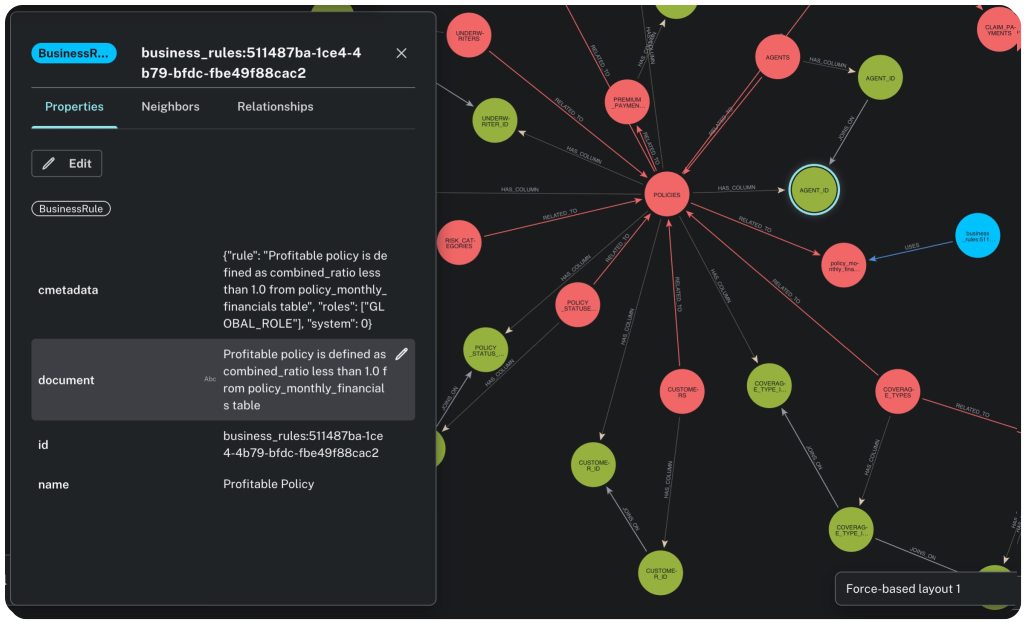
The Insights Context Graph is a proprietary graph that connects data assets, definitions, relationships, business rules, and usage patterns into a single navigable structure. Unlike flat metadata catalogs or disconnected glossaries, the graph represents how your data actually relates — across sources, across teams, and across domains. When a question comes in, the graph resolves it to the right data, the right joins, the right definitions, and the right rules.
Multi-Dimensional, Cross-Source Context Engineering
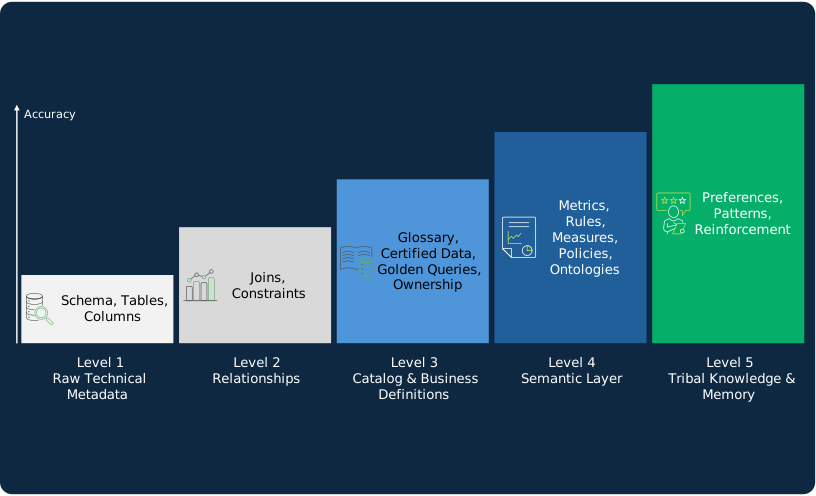
The Context Hub ingests and curates context across 5 levels — from raw technical metadata and source relationships, through catalog definitions and business rules, to semantic models and tribal knowledge. Each level adds accuracy. And because context is sourced from your existing tools — data catalogs, BI platforms, semantic layers — you’re not building from scratch. You’re leveraging what you already have, unified into a single signal.
Domain & User Personalization
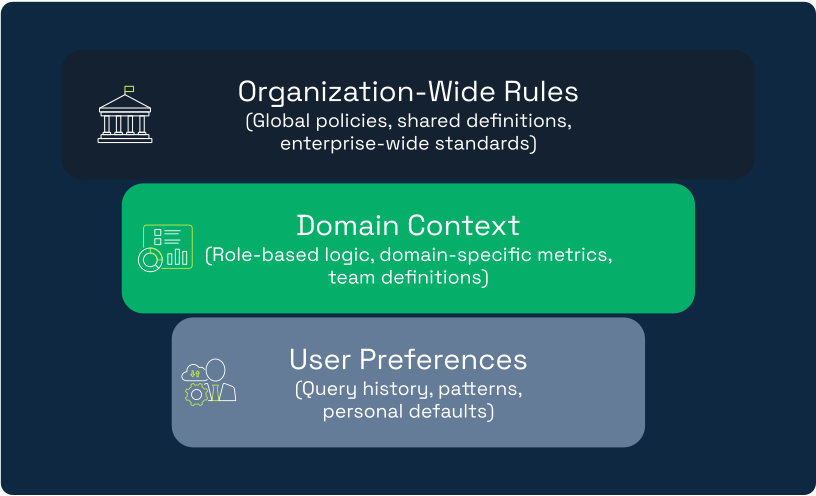
Context in the 360° Context Hub is not one-size-fits-all. A three-level rule hierarchy — organization-wide rules, domain context (including role), and user preferences & patterns — ensures that every answer is tuned to who’s asking and what they need. The result: a CFO and a regional sales manager asking “show me revenue” get different, correct answers — because the graph understands their context.
HOW IT WORKS
Inside the Insights Context Graph
The Insights Context Graph is not a static catalog. It’s a live, queryable structure that grows with every data source you connect, every definition you add, and every question your team asks. Here’s how it works under the hood.

Connect to Your Existing Context Sources
The graph ingests context from where it already lives — data catalogs (Alation, Collibra, Atlan), BI tools (Tableau, Power BI, Looker), semantic layers (dbt, AtScale), and your own documentation. No rip-and-replace.
Build the Graph Automatically
Promethium maps relationships between tables, columns, metrics, definitions, and rules — across sources. GenAI helps to infer missing connections, resolves conflicts between duplicate definitions, and enriches the graph with relationships your catalog doesn’t capture.

Resolve Questions Against the Graph
When a question comes in, the engine traverses the graph to find the right data, the right joins, the right metric definitions, and the right access rules — all in real time. The graph turns ambiguous business questions into precise, contextually correct queries.

Validate and Reinforce with Your Team
Every answer can be endorsed, corrected, or flagged by users. Endorsements confirm that the graph resolved correctly — locking in validated paths for future queries. Corrections update the graph directly, fixing definitions, joins, or metric logic at the source. This isn’t passive feedback — it’s an active validation loop where your domain experts teach the graph what “right” looks like, and the graph remembers.

Personalize by Domain and User
Organizational rules, domain-specific context, and user-level preferences layer on top of the graph — so the same question returns the right answer for every user, every time.
THE PROMETHIUM DIFFERENCE
The Fastest Way to Production Accuracy.
Leverage What You Already Have
The Context Hub connects to your existing catalogs, BI tools, and semantic layers. You’re not building context from scratch — you’re unifying and activating what you’ve already invested in. First domain live in 4 weeks.
Context That Compounds
Every domain you add, every correction your team makes, every query pattern the graph learns — it all compounds. The fourth deployment is faster and more accurate than the first. This is the AI Insights Flywheel in action.
The First of Its Kind
The Insights Context Graph is a proprietary structure with no equivalent in the market. Catalogs store definitions. BI tools store metrics. The Context Graph connects all of it into a navigable, queryable whole — and that’s why Promethium reaches production accuracy where others plateau.